
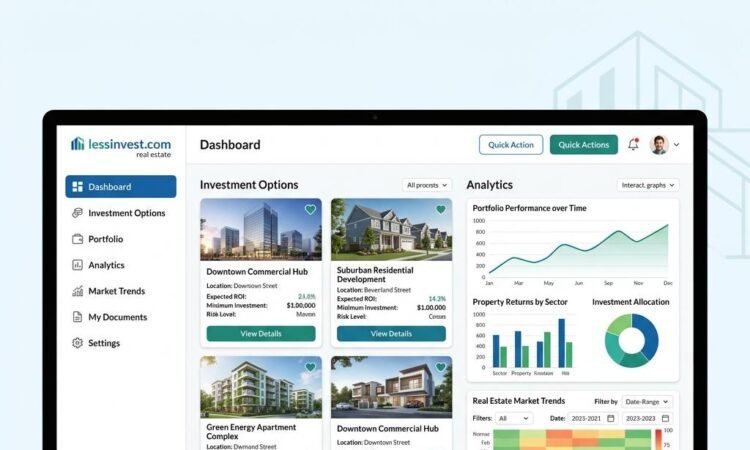
lessinvest.com real estate gives everyday investors a simpler way to explore property deals without buying an entire building on their own. That is a big shift, and honestly, it opens the door for people who want exposure to real estate without the usual stress of handling tenants, repairs, and paperwork.
This guide explains how lessinvest.com real estate works, what types of properties may be available, what returns investors often look for, and where the real risks sit. You will also learn how Fractional Ownership, Passive Income, REITs, tax benefits, and digital tools fit into a smarter long-term plan.
Introduction
Real estate has a strong pull for investors because it blends income, asset growth, and the comfort of owning something tied to the real economy. When people talk about building wealth slowly and steadily, property often enters the chat for a very good reason.
At the same time, buying a whole property can feel heavy, expensive, and hard to manage. That is where lessinvest.com real estate stands out, offering a more accessible path through digital investing, lower entry points, and a smoother way to build exposure.
Why Real Estate Remains a Top Investment Choice
Real estate continues to attract investors because it can produce both monthly cash flow and long-term value growth. A rental property, a Commercial Real Estate deal, or a basket of REITs can all serve different goals while supporting Portfolio Diversification.
Another reason is stability. Property values may rise and fall with Market Trends, but real estate remains tied to housing needs, business activity, and land use, which gives it a practical base that many investors appreciate.
| Feature | LessInvest.com Real Estate | Traditional Real Estate Investing |
| Entry Cost | Often starts around $100 or $500–$5,000 | Usually requires large down payment |
| Ownership Style | Fractional Ownership or pooled access | Full direct ownership |
| Income Potential | Shared Rental Income and distributions | Direct rent collection |
| Management | Often handled through platform or sponsors | Investor handles or hires management |
| Diversification | Easier to spread funds across deals | Harder with limited capital |
| Accessibility | More beginner-friendly digital access | Higher barrier to entry |
| Liquidity | Can be limited depending on hold period | Often slow to sell |
| Compliance | Includes KYC/AML Compliance steps | Depends on lender and deal type |
| Reporting | Digital dashboards and performance tracking | Manual tracking is common |
| Investor Type | Open to new and passive investors | Better suited to hands-on buyers |
The Role of Digital Platforms in Modern Investing
Digital platforms changed the way people enter markets that once felt closed off. With a few clicks, investors can now review property details, projected returns, hold periods, and risks in one place, which makes decision-making much easier.
That convenience matters. People want tools that save time, explain the numbers clearly, and reduce confusion. Digital Investment Platforms help do exactly that by combining Market Analysis, onboarding, and reporting into one simple flow.
What is LessInvest.com Real Estate?
At its core, lessinvest.com real estate refers to a digital approach that connects investors with real estate opportunities in a more flexible format. Instead of needing enough money to buy a full asset, users may invest smaller amounts into curated deals or managed real estate offerings.

This structure can support both new and experienced investors. It blends Financial Education, access to property data, and a more practical route into Passive Wealth Building, which makes it appealing for people who value simplicity and choice.
Overview of the Platform
The platform model usually centers on browsing offerings, reviewing documents, and choosing investments that match your budget and goals. Investors can compare deals based on property type, projected timeline, and expected income potential.
It feels far more approachable than old-school real estate investing. That is a big reason many people search for a LessInvest real estate guide before putting money to work.
Key Features and Benefits
Some of the strongest features include easier access, lower investment minimums, and tools that support informed decisions. Investors may also like the clean reporting, streamlined onboarding, and broader exposure to multiple property categories.
There is also a convenience factor that is hard to ignore. For many users, the appeal is not just property access, but access without constant management headaches.
How LessInvest.com Real Estate Works
The basic model is simple: investors review available offerings, complete account setup, transfer funds, and choose opportunities that fit their strategy. Those opportunities may involve pooled investments, sponsored deals, or structures tied to income-producing properties.
What makes lessinvest.com real estate attractive is how it reduces friction. Instead of negotiating every detail alone, investors can rely on digital workflows, sponsor oversight, and transparent reporting to stay informed.
Fractional Ownership Explained
Fractional Ownership allows many investors to own small shares in one property or project. This means you can gain exposure to real estate without covering the full purchase price yourself.
It is one of the clearest examples of Real Estate Accessibility. Smaller amounts of capital can now reach assets that once seemed far out of reach.
Passive Income Distribution
Many deals are built around periodic payouts from rental operations or asset performance. These distributions are a major draw for people exploring LessInvest passive income strategies.
The key point is that income may come without active landlord duties. That makes the model especially useful for busy professionals and hands-off investors.
Digital Investment Dashboard
A digital dashboard helps investors track invested capital, distributions, target timelines, and return metrics in one place. This is where Real-Time Data and a better user experience really shine.
Good dashboards improve clarity. You can review progress, compare properties, and make better choices without digging through scattered files or email chains.
Types of Properties Available
A strong platform usually offers different property categories so investors can build a more balanced portfolio. This may include residential rentals, office or retail assets, hospitality plays, and professionally managed trust structures.
This variety matters because different property types behave differently. A mix can help reduce concentration risk and align your portfolio with both income and growth goals.
Multifamily Apartments
Multifamily Apartments are popular because they spread vacancy risk across many units. If one unit is empty, the whole asset does not stop producing income.
They also tend to fit long-term housing demand. For investors, that can translate into steadier occupancy and more predictable cash flow over time.
Commercial Real Estate
Commercial Real Estate includes office buildings, retail centers, warehouses, and mixed-use assets. These investments can offer strong lease structures, though performance depends heavily on location and tenant quality.
This area can be exciting, but it needs close review. Economic shifts, local demand, and lease renewal risk all play a part in returns.
Vacation Rentals
Vacation Rentals can produce strong income in the right market, especially in high-demand travel areas. Seasonal patterns, local rules, and occupancy rates matter a great deal here.
These properties may offer upside, but they can also be more volatile. Investors should check whether income projections are realistic and well supported.
REITs and Value-Add Properties
REITs (Real Estate Investment Trusts) offer another way to access property markets through pooled structures. They can be useful for broad exposure, especially for people who want easier entry and passive participation.
Value-Add Properties aim to increase returns through upgrades, better management, or repositioning. These deals often come with more upside potential, but they usually carry more execution risk too.
Minimum Investment Requirements
One of the most appealing parts of lessinvest.com real estate is the range of entry points. Some offerings may start around $100, while others fit within the $500–$5,000 range, which feels much more realistic for many beginners.
On the other end, premium or private deals may require $25,000+, especially when aimed at Accredited Investors. This tiered structure lets users match opportunities to both budget and experience.
Entry-Level Investments
Lower minimums are helpful because they allow investors to test the platform without overcommitting. You can start small, learn the process, and build confidence over time.
That also supports better diversification. Instead of putting all your money in one deal, you may spread it across several investments.
Accredited Investor Opportunities
Some offerings are reserved for Accredited Investors, often under Regulation D or other securities rules. These deals may involve larger commitments and more complex structures.
In return, they may offer access to unique or higher-growth projects. Still, larger deals need deeper due diligence and a clear understanding of risks.
Expected Returns and Wealth-Building Mechanisms
Returns in real estate usually come from a blend of income and appreciation. Investors may look at annual cash yield, sale profit, Equity Multiple, and Internal Rate of Return (IRR) when reviewing potential performance.
Some deals may target 6%–8% annual returns, while others highlight 12%–18% targeted IRR and 40%–60% projected profit on sale over a 5-year hold period. These are projections, not guarantees, and that distinction matters.
Capital Appreciation
Capital Appreciation happens when a property rises in value over time. This gain may come from market growth, renovations, stronger rents, or improved operations.
It is often one of the biggest drivers of long-term wealth. A modest cash payout can still become a strong overall return if the property sells well.
Rental Income
Rental Income is the regular cash generated by tenants paying to use the property. For many investors, this is the heart of the passive income appeal.
Steady income can help smooth the waiting period before a sale. It also gives investors a clearer sense of how the asset is performing in real time.
Tax Benefits
Real estate has long been valued for Tax Benefits, and that remains a major attraction. Deductions, depreciation, and strategic planning can improve after-tax results in ways many new investors do not expect.
Residential property may use 27.5 years of depreciation, while commercial assets often use 39 years. Depending on structure and eligibility, some investors may also benefit from the 20% pass-through deduction, 1031 Exchange rules, or Opportunity Zones strategies.
Creating Your LessInvest.com Account
Getting started usually begins with a simple online registration process. You provide personal details, verify your identity, review disclosures, and create the account needed to access available investments.
The process tends to be far smoother than arranging a traditional purchase. That ease is a major reason lessinvest.com real estate appeals to people who want a simpler first step into property investing.
Registration Process
Most users begin by entering their name, email, contact details, and financial profile. Depending on the offering type, the platform may ask extra questions about investor status and risk tolerance.
This step should not be rushed. Accurate details help ensure smoother approvals and proper access to relevant investment options.
KYC/AML Compliance
KYC/AML Compliance stands for know your customer and anti-money laundering checks. These steps help platforms verify identity, reduce fraud, and meet legal standards.
It may feel routine, but it is important. Strong compliance systems usually point to better operational discipline and safer onboarding.
Funding Your Account
After approval, users typically connect a bank account and transfer funds into the platform. Some investments may allow a quick entry, while others have offer windows or minimum thresholds to meet.
Before funding, it is smart to review timing and liquidity. Once your money is committed, it may stay tied to that deal for years.
Selecting Your First Investment Property
Choosing a first investment can feel exciting and a little overwhelming at the same time. A good rule is to focus on simple, understandable deals before moving into more specialized strategies.
When reviewing lessinvest.com real estate, start with assets that match your goals, budget, and time horizon. If you want income, look for stable rentals; if you want growth, value-add opportunities may deserve a closer look.
Analyzing Property Details
Read the property summary carefully and look at location, occupancy, rent trends, expenses, and exit plans. Good investing often starts with good reading.
You should also review the sponsor’s assumptions. If the numbers feel too perfect, pause and dig deeper before committing.
Assessing Risk Factors
Every deal comes with risk, whether it is vacancy, rising rates, local downturns, or construction delays. Smart investors do not ignore risk; they price it in.
This is where Risk Management becomes practical. The better you understand downside scenarios, the better your choices will be.
Diversification Strategies
Diversification means spreading your money across different asset types, markets, and timelines. It helps reduce the damage one weak deal can cause.
This is one of the most useful LessInvest smarter investing tips for beginners. Small allocations across several opportunities often beat one oversized bet.
Managing Your Real Estate Investments
After investing, your job shifts from selection to monitoring. You want to track performance, review updates, and make sure your portfolio still fits your financial plan.
This is where lessinvest.com real estate can be useful for passive investors. Centralized reporting makes it easier to stay informed without turning investing into a second job.
Tracking Performance Metrics
Watch metrics like occupancy, net cash flow, distribution history, IRR, and Equity Multiple. These numbers help you judge whether a deal is meeting expectations.
Do not focus on one figure alone. Strong investing decisions come from looking at the full picture, not a single headline number.
Reinvesting Dividends
Some investors take distributions as income, while others use Dividend Reinvestment Plans (DRIPs) or similar strategies to compound growth. Reinvestment can be powerful over long periods.
If you do not need the cash right away, compounding may strengthen your portfolio. It is a simple move, but over time it can make a real difference.
Tax Considerations
Taxes should never be an afterthought in property investing. Income treatment, depreciation, and capital gains all affect what you actually keep.
That is why many people pair investing with planning. A smart tax strategy can improve net returns even when headline returns stay the same.
Comparing LessInvest.com to Traditional Real Estate Investing
Traditional real estate often demands large capital, lender coordination, property oversight, and more time than people expect. Some investors enjoy that control, but many do not want the stress that comes with it.
By contrast, lessinvest.com real estate offers a more streamlined path through digital access, pooled structures, and easier reporting. It may give up some control, but it gains convenience, reach, and efficiency.
Accessibility and Low Entry Barriers
Lower minimums make the platform style more inclusive. Investors who cannot buy a full rental home may still gain property exposure with a smaller starting amount.
That broadens participation and supports Financial Inclusion. More people can build real estate exposure without waiting years to save for a full purchase.
Simplified Processes vs. Complex Management
Traditional investing can involve contractors, tenants, insurance claims, and endless admin work. Platform-based investing often removes much of that burden.
That does not erase risk, of course, but it does reduce operational hassle. For many people, that trade-off is worth it.
Risks Associated with LessInvest.com Real Estate
No investment is risk-free, and property deals are no exception. Even strong platforms can face market declines, project delays, tenant issues, or lower-than-expected exit prices.
The smartest approach is balanced optimism. lessinvest.com real estate may create opportunity, but success still depends on due diligence, realistic expectations, and disciplined portfolio planning.
Market Fluctuations
Property values can rise and fall with rates, local demand, inflation, and broader economic conditions. A strong market today may look very different in two years.
That is why timing and patience matter. Real estate is often best viewed through a long-term lens rather than a short-term one.
Liquidity Challenges
Real estate is not as liquid as stocks or cash. Many deals lock funds up for years, and early exit options may be limited or unavailable.
This point deserves extra attention. Never invest money you may need soon for emergencies or short-term goals.
Platform Transparency
Transparency matters because investors rely on the platform to deliver updates, explain fees, and share risks clearly. If reporting is vague, that is a warning sign.
Strong Transparent Platforms build trust with timely updates and clear documents. That is a feature, not a bonus.
Who Should Consider LessInvest.com Real Estate?
This kind of platform can work well for people who want property exposure without taking on full landlord responsibilities. It fits investors who value convenience, diversified access, and a digital-first experience.
It may also help people who are still learning. For those exploring a LessInvest trusted investment guide, the platform model can serve as a gentle entry into a more complex asset class.
Beginners
Beginners often benefit from lower minimums, guided onboarding, and simpler deal presentation. Starting with a modest amount can make learning feel far less intimidating.
That is especially helpful when paired with LessInvest financial education content. Education and access together create a stronger foundation.
Passive Investors
Passive investors want income and growth without daily management tasks. For them, platform-based real estate can be a practical match.
Instead of fixing sinks or chasing rent, they can focus on allocation, review, and long-term planning. That is a very different experience from direct ownership.
Experienced Investors Seeking Diversification
Experienced investors may use digital real estate to diversify beyond stocks, bonds, or even direct property holdings. It can fit as one sleeve within a larger portfolio.
Some may also compare it with LessInvest stock market advice or even LessInvest cryptocurrency and real estate themes when building a broader allocation strategy.
The Role of Technology in Real Estate Investing
Technology is changing how people discover, analyze, and manage property investments. Better data, faster onboarding, and cleaner reporting all improve the investor experience.
This matters because complexity often stops people from taking action. With stronger tools and simpler interfaces, real estate becomes easier to understand and easier to access.
Real-Time Data and Analytics
Real-Time Data helps investors review occupancy trends, projected cash flow, and market shifts more quickly. Better data does not remove risk, but it improves decision quality.
This is where Data-Driven Insights become powerful. Investors can spot patterns, compare opportunities, and avoid relying only on emotion.
Enhancing Transparency and Efficiency
Technology can reduce delays, simplify documents, and make investment updates easier to follow. That creates a smoother system for both platforms and users.
It also supports trust. When information is organized well, investors feel more confident about what they own and why they own it.
Future Potential of LessInvest.com Real Estate
The future of digital property investing looks promising because investors want access, clarity, and flexibility. Platforms that combine education, compliance, and strong user tools may continue to gain attention.
That is one reason lessinvest.com real estate keeps drawing interest. It sits at the intersection of property investing, digital convenience, and broader financial participation.
Evolving Trends in Digital Property Investment
More investors are becoming comfortable with online investing models, pooled ownership structures, and remote decision-making. That trend supports continued growth in digital real estate access.
Regulations like Regulation A+, Regulation CF, the JOBS Act, and evolving Crowdfunding frameworks have also helped expand participation.
Opportunities for Growth and Innovation
Future growth may come from better analytics, stronger secondary markets, and more personalized investment tools. Platforms may also build deeper educational layers and improved investor reporting.
There is also room for cross-asset learning. Topics such as LessInvest real estate and crypto show how modern investors increasingly think across categories, not in isolated buckets.
Conclusion
Real estate remains one of the most practical ways to build wealth because it can combine income, appreciation, and meaningful tax advantages. What changes now is access, and that is where digital platforms make a real impression.
For many investors, lessinvest.com real estate offers a simpler entry into property markets through lower minimums, easier diversification, and better tools for tracking performance. That does not remove the need for caution, but it does make smarter property investing far more reachable.
Why LessInvest.com is a Game-Changer
The platform approach lowers barriers that once kept many people out of real estate. Smaller entry points and better digital tools create a more flexible path forward.
That is a real shift, not just a marketing angle. It changes who can participate and how they can start.
Final Thoughts on Smarter Property Investment
If you want hands-off exposure, disciplined diversification, and a more modern investing experience, this model deserves a serious look. Start small, study each deal, and think long term.
That may not sound flashy, but it is often how real wealth gets built. Slow, steady, and informed still works beautifully.
FAQs
How to Start Investing with Minimal Resources
Start by setting a small budget and focusing on lower-minimum offerings, such as deals around $100 or within the $500–$5,000 range. Learn the platform, review the terms, and avoid rushing your first choice.
Keep your first moves simple. A beginner-friendly deal with clear cash flow and plain-language reporting is often a smart place to begin.
Understanding the 2% Rule in Real Estate
The 2% rule is a rough screening idea that suggests a rental property’s monthly rent should equal about 2% of the purchase price. Investors use it as a quick filter, not a final decision tool.
It is useful, but limited. Expenses, financing, location, and market quality still matter far more than one shortcut rule.
Is LessInvest.com Suitable for Beginners?
Yes, it can be suitable for beginners, especially those who want real estate exposure without direct property management. Lower minimums, digital dashboards, and educational support can make the learning curve easier.
Still, beginners should move carefully. Read each offering, understand the hold period, and treat every investment as a real financial commitment.