Introduction
Information is everywhere, but useful understanding is still hard to find. People scroll through endless pages, open dozens of tabs, and save articles they never revisit. The problem is no longer access alone. The problem is clarity. Many platforms publish content at scale, yet only a few turn scattered facts into something people can follow, trust, and apply in real life.
That is where PushWiki Com stands out. Instead of adding to information overload, it aims to organize knowledge in a way that feels structured, readable, and practical. It does not treat learning as a random search experience. It treats it as a guided journey. That difference matters for students trying to understand a concept, researchers looking for reliable summaries, entrepreneurs seeking workable ideas, and digital marketers who need current, actionable knowledge rather than vague advice.
The value of PushWiki Com comes from the way it combines knowledge sharing with structured learning and digital strategy. Its content model supports simplification without watering things down. Readers can move from basic explanations to practical application through step-by-step guides, book-style reading, real-world examples, and logically arranged learning modules. This makes the platform useful not only for education but also for decision-making.
In 2026, clear and verified content has become more important than ever. Audiences in the USA and beyond expect speed, but they also expect trust. They want content that is beginner-friendly, fact-checked, visually clean, and worth their attention. A platform that can meet those expectations while serving a global audience has a strong role to play in the democratization of knowledge.
This article takes a deep dive into how PushWiki Com approaches that role. It looks at the platform as a collaborative knowledge base, a learning environment, and a digital strategy resource. It also explores how its framework supports influencer campaigns, campaign structuring, ROI measurement, trust building, and content retention. Along the way, we will examine why the platform’s model matters, how it helps different user groups, and why its future looks increasingly relevant.
The Need for Simplified Knowledge Platforms
| Area | Why It Matters | How PushWiki Com Responds |
| Information Overload | Readers face too much fragmented content online | Organizes topics into structured learning paths |
| Clarity | Complex topics often confuse beginners | Uses simplified, beginner-friendly explanations |
| Accessibility | Users need content that is easy to read and apply | Offers readable formatting and practical guidance |
| Knowledge Retention | Dense content is often forgotten quickly | Supports book-style reading and progressive learning |
| Trust and Credibility | Users want verified and fact-checked information | Emphasizes structured content reviews and trust building |
| Practical Application | Readers want more than theory | Provides actionable knowledge and real-world examples |
| Digital Marketing Relevance | Businesses need measurable online strategies | Covers influencer campaigns, engagement, and ROI measurement |
| Global Reach | Audiences come from different backgrounds and skill levels | Serves students, researchers, entrepreneurs, and marketers worldwide |
| Visual Experience | Poor design reduces comprehension and retention | Prioritizes UI/UX design and visual cleanliness |
| Knowledge Democratization | Useful knowledge should not stay limited to experts | Makes structured information easier to access for all |
Why simplification is no longer optional
A large share of online content fails because it assumes too much. It assumes readers already know the basics. It assumes they can connect gaps on their own. It assumes they have time to sort through long, repetitive explanations. In reality, most people want a clear starting point and a path that helps them move forward without confusion.
Simplification does not mean making knowledge shallow. It means removing friction. It means turning a hard subject into one that can be followed step by step. Good simplification helps readers understand what matters, why it matters, and what to do next. That is one of the biggest reasons structured platforms are gaining attention.
The cost of messy information
When information is disorganized, people do not just lose time. They lose momentum. A student may give up on a topic. A researcher may overlook a useful angle. An entrepreneur may act on weak advice. A marketer may waste budget on a campaign with no real framework for engagement or ROI measurement.
This is why knowledge platforms are no longer judged only by how much they publish. They are judged by how well they help readers understand, retain, and use information.
Overview of PushWiki Com
PushWiki Com presents itself as more than a standard content site. Its value lies in how it structures knowledge for practical reading. The platform reflects a broader shift in digital publishing: readers do not just want access to information, they want direction.
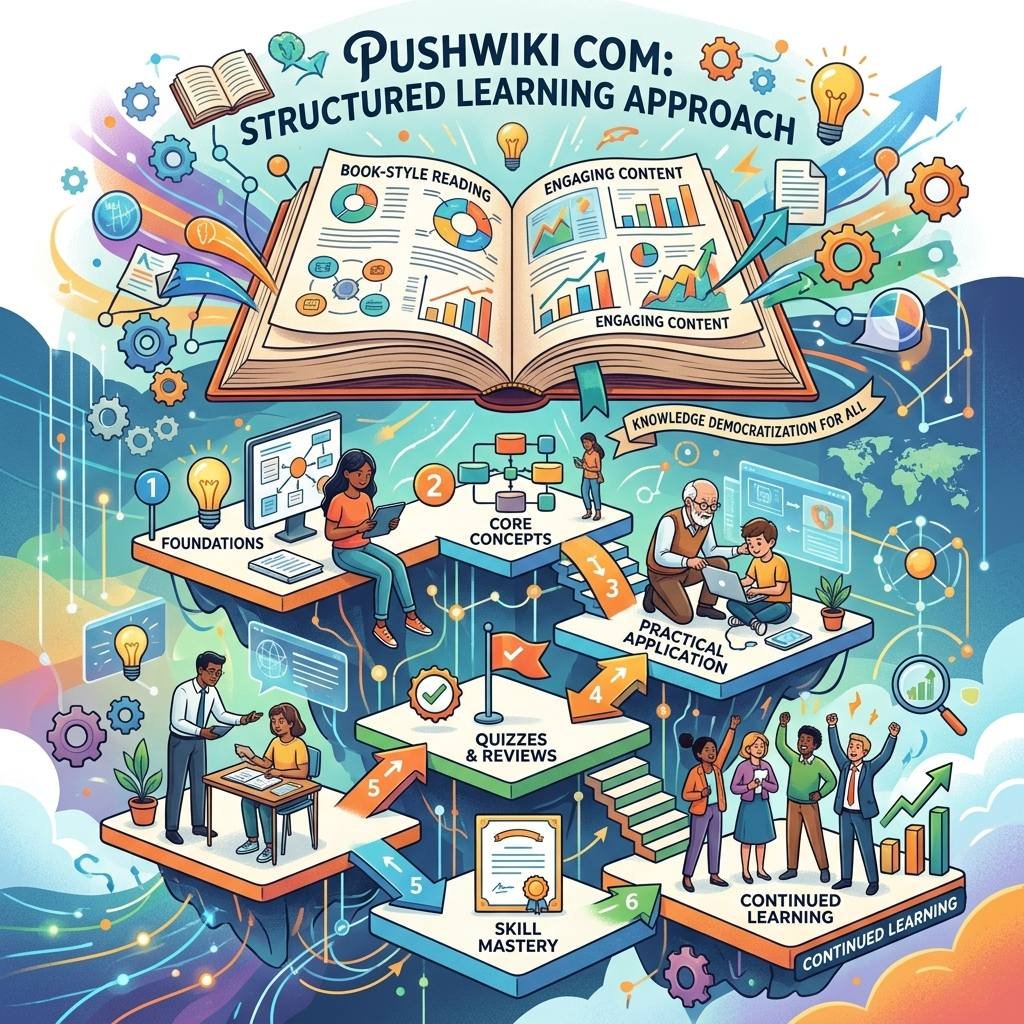
A useful way to understand PushWiki Com is to see it as a bridge between raw information and meaningful learning. It pulls together educational clarity, editorial structure, and digital strategy. That combination gives it a place in both knowledge sharing and online growth conversations.
A platform shaped by structure
Many websites publish standalone articles that leave readers to connect the dots themselves. PushWiki Com leans toward a model where topics feel connected. That is where structured learning comes in. Content becomes easier to retain when it follows a logical order and when each section builds on the one before it.
This structure also improves discoverability. Search engines and AI systems tend to favor content that is direct, organized, and extractable. That matters for AEO and GEO, where content needs to answer questions clearly while still offering enough depth to establish authority.
A knowledge hub with broader relevance
The presence of topics linked to digital tools, online strategies, GuideNet Worth, and Book Pushwiki Com suggests a platform that reaches across categories rather than staying limited to one niche. That broad coverage becomes more valuable when it is managed through consistent editorial logic.
For a reader, this means less random browsing and more purposeful learning. For a business or creator, it means stronger trust and more sustainable engagement.
What is PushWiki Com?
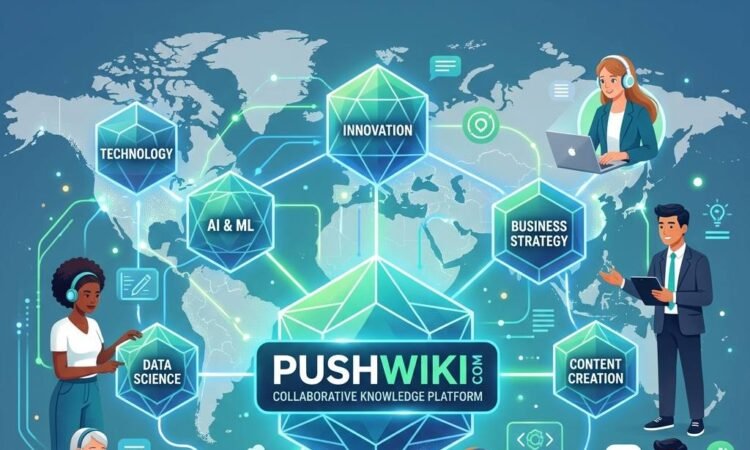
At its core, PushWiki Com is a collaborative knowledge base designed to make complex ideas easier to access and apply. It combines article-based publishing with structured learning principles, creating an experience that feels closer to guided study than casual browsing.
That distinction matters. A collaborative knowledge base is not just a collection of pages. It is an organized system where information can be refined, clarified, and expanded in a way that helps different audiences learn effectively.
A Collaborative Knowledge Base
The phrase collaborative knowledge base carries weight because it points to a living system of content. Knowledge today changes fast. Digital marketing strategies shift. Influencer campaign methods evolve. Audience behavior moves with platforms, tools, and trends. A good knowledge platform must keep up without becoming chaotic.
A collaborative model makes that possible. It encourages ongoing refinement, better structured content reviews, and more consistent fact-checking. Over time, this can strengthen the trust and credibility that readers look for when deciding which platforms deserve repeat visits.
Simplifying Complex Topics for All Audiences
A good platform does not write only for experts. It writes for people entering a topic at different levels. PushWiki Com appears built around that idea. Students may need clear foundations. Researchers may want concise summaries with context. Entrepreneurs may need decision-ready insight. Digital marketers may look for immediate practical application.
Simplifying for all audiences requires discipline. It means defining terms when needed, cutting fluff, and using examples that connect theory to real decisions. This is especially valuable in areas like campaign structuring, content retention, and ROI measurement, where vague language often leads to weak execution.
The Evolution of Knowledge Sharing
Knowledge sharing has changed from closed systems to open networks. In the past, useful information often sat behind institutions, experts, or expensive channels. Today, access is wider, but quality is uneven. The web solved one problem and created another.
That is why the next stage of knowledge sharing is not just openness. It is organization.
From Gatekept Information to Democratized Knowledge
For years, expertise was often tied to formal institutions, private networks, or expensive resources. That model left many people outside the conversation. The democratization of knowledge changed that by making learning materials, guides, and commentary more widely available online.
But access alone does not guarantee understanding. If information is scattered, jargon-heavy, or unreliable, it remains functionally out of reach for many users. True knowledge democratization requires both access and clarity.
This is where platforms like PushWiki Com become important. They help turn open access into usable access. That shift supports a broader culture of learning in which knowledge is not reserved for a small group of insiders.
Overcoming Information Overload
Information overload is one of the defining challenges of modern digital life. Readers are not short on content. They are short on filters. Without structure, even accurate information can feel exhausting.
A strong platform responds by doing three things well:
- Curating what matters
- Structuring it logically
- Explaining it clearly
These are simple ideas, but they are hard to execute consistently. When done well, they improve accessibility, content retention, and reader confidence.
Platform Features
The real strength of a knowledge platform is visible in the features that shape reading and learning. In the case of PushWiki Com, the emphasis falls on structure, clarity, usability, and practical application.
Structured Learning Modules
Structured learning modules help transform content into a guided experience. Instead of isolated posts, readers encounter topics in a sequence that makes sense. This mirrors how people actually learn. They need foundations before advanced tactics. They need examples before abstraction. They need progression.
For students and researchers, modules reduce confusion. For entrepreneurs and marketers, they speed up skill-building. For all users, they support knowledge retention because ideas are introduced in a controlled and coherent order.
Step-by-Step Guides for Practical Application
Theory matters, but action closes the gap between knowing and doing. Step-by-step guides are one of the most useful content formats because they reduce uncertainty. They break large ideas into manageable moves.
This is especially relevant in digital marketing strategies. A reader trying to launch an influencer campaign, review content performance, or improve engagement needs more than definitions. They need a process. Step-by-step guides can show how to plan, execute, measure, and refine.
Book-Style Reading for Enhanced Retention
Book-style reading creates a different mental rhythm from standard online skimming. It encourages focus, continuity, and deeper comprehension. In a digital environment shaped by fast scrolling, that style can improve content retention.
Book Pushwiki Com reflects this principle well. When articles feel intentionally sequenced and visually clean, readers are more likely to stay with the material. This benefits both the learning experience and the platform’s long-term trust building.
UI/UX Design and Visual Cleanliness
Strong content can still fail if the reading experience feels cluttered. Visual cleanliness matters because design influences comprehension. Good UI/UX design reduces distraction, improves accessibility, and supports reader flow.
A visually clean page helps users focus on meaning rather than layout noise. It also improves the odds that readers will complete a guide, revisit a topic, or move into related content areas.
Target Audience
A broad platform works only if it understands how different groups use information. PushWiki Com appears positioned for several audiences at once, which gives it flexibility but also requires careful editorial balance.
Students and Researchers
Students need structure. Researchers need efficiency. Both groups benefit from a platform that explains core ideas without losing accuracy. Clear learning modules, practical examples, and organized content reviews make study less fragmented.
For students, beginner-friendly content lowers the barrier to entry. For researchers, concise summaries can serve as useful starting points before deeper investigation. In both cases, verified and fact-checked material matters because trust shapes whether readers return.
Entrepreneurs and Digital Marketers
Entrepreneurs often learn under pressure. They do not always have time for long theory without application. They need fast clarity on tools, trends, strategy, and execution. Digital marketers need the same, but with even greater demand for measurable outcomes.
That makes content on digital tools, online strategies, influencer campaigns, campaign structuring, and ROI measurement especially useful. A platform that covers these areas in a practical way can serve as both a learning resource and a working reference.
Learning with PushWiki Com
Learning is strongest when it feels cumulative. One idea unlocks the next. One example makes the next decision easier. That is the promise of a structured platform.
Progressive Learning Approach
Progressive learning means readers are not dropped into the deep end. They move from foundational ideas to more advanced understanding. This supports confidence, especially for beginners.
A progressive model also respects how people process information. Most readers need repetition, reinforcement, and gradual depth. If content is built with that rhythm in mind, retention improves.
Real-World Examples and Practical Insights
Examples are where abstract ideas become useful. A guide about trust building is stronger when it shows how credibility grows through fact-checked content, transparent review methods, and consistent publishing quality. A discussion of digital strategy is stronger when it connects tactics to real engagement and business outcomes.
This is one reason practical insights matter so much. They keep content from becoming generic. They also help readers judge whether a strategy fits their own situation.
Influencer Campaigns on PushWiki Com
Influencer campaigns are now a major part of digital marketing strategies, but many guides treat them too loosely. They focus on visibility while ignoring structure. A better approach starts with alignment, process, and measurement.
Structuring Successful Campaigns
A successful influencer campaign begins long before content goes live. It starts with clear goals. Is the brand seeking awareness, traffic, lead generation, community growth, or direct conversions? Without that clarity, the rest of the campaign tends to drift.
A strong structure often includes:
- Audience mapping
- Platform selection
- Creator fit review
- Message alignment
- Content format planning
- Budget allocation
- Timeline management
- Performance benchmarks
This is where a structured learning platform adds value. It can explain not only what each step means, but how the steps connect.
Measuring ROI and Engagement
ROI measurement is one of the most overlooked parts of influencer marketing. Vanity metrics can look impressive while business value remains weak. Likes alone do not prove impact. Smart measurement looks at the full picture.
Useful metrics may include:
- Reach and impressions
- Engagement rate
- Click-through rate
- Leads generated
- Conversion rate
- Revenue attributed
- Cost per result
- Brand lift indicators
A platform that teaches ROI measurement clearly helps readers avoid waste. It also helps marketers build more credible reports and make better decisions over time.
Building Authentic Connections
The strongest campaigns do not feel forced. They work because the creator, message, and audience fit together naturally. Authentic connections lead to stronger engagement and better long-term trust.
That is why campaign structuring should include more than numbers. It should also consider voice, relevance, timing, and audience expectations. When those elements align, content feels less like advertising and more like useful communication.
Why Choose PushWiki Com?
The value of a knowledge platform becomes clear when we ask a simple question: why return to it instead of searching again elsewhere? The answer usually comes down to usefulness, trust, and reading experience.
Beginner-Friendly Explanations
Many websites lose readers by sounding knowledgeable without being understandable. Beginner-friendly writing is not a downgrade. It is a skill. It requires clarity, control, and respect for the reader’s time.
A platform that explains topics in plain language while keeping depth intact creates a wider path into learning. That matters for first-time readers and experienced users alike.
Actionable Knowledge for Real-World Application
Actionable Knowledge is one of the clearest signs of quality. It tells readers not just what something is, but how it works in practice. Whether the subject is GuideNet Worth, digital tools, or influencer planning, the content becomes more valuable when it leads to a next step.
This practical emphasis is often what separates content people bookmark from content they forget.
Global Reach and Accessibility
A global audience brings different expectations, levels of familiarity, and use cases. Accessibility therefore matters at several levels. It includes readable language, logical formatting, inclusive examples, and design choices that support easy navigation.
For users in the USA and beyond, accessibility also supports fairness. Knowledge is more democratic when more people can understand and apply it.
Building Trust and Credibility
Trust is one of the hardest things to build online and one of the easiest to lose. A platform earns trust through consistency, transparency, and content quality over time.
Rigorous Fact-Checking Processes
Fact-checked and verified content builds confidence. Readers may not inspect every detail, but they notice when a platform feels careful. That sense of care matters even more in educational and strategic topics where bad advice can lead to poor outcomes.
If PushWiki Com continues to emphasize structured content reviews, it strengthens more than accuracy. It strengthens reputation.
The Role of Ahsan Awan and 307+ Articles
The mention of Ahsan Awan and 307+ articles adds a layer of visible authorship and publishing scale. Volume alone does not prove quality, but consistent output tied to identifiable contribution helps readers see that the platform is active and invested in its content ecosystem.
When authorship, structured reviews, and editorial consistency work together, credibility becomes easier to sustain.
Overcoming Challenges in Simplification
Simplification has its own risks. Reduce too much, and content becomes vague. Add too much detail, and readers lose the thread. The challenge is finding the point where clarity and depth reinforce each other.
That balance is what makes high-quality educational content difficult to produce. It requires editorial judgment, subject awareness, and a strong sense of audience needs.
The Future of PushWiki Com
The future of knowledge platforms will likely depend on one central question: can they remain clear while becoming more comprehensive? Growth often creates clutter. The best platforms avoid that by treating structure as a core principle, not an afterthought.
Meeting the Growing Demand for Clear and Reliable Content
Readers are becoming more selective. They want faster answers, but they also want better answers. Search behavior is changing, and AI-generated summaries are pushing platforms to produce content that is easier to extract, verify, and trust.
This is where AEO and GEO matter. Content that defines terms clearly, answers real questions, and organizes ideas well has a better chance of being surfaced in AI search and featured summaries.
A platform built around structured learning is well positioned for this shift.
Combining Depth with Accessibility
Depth without accessibility limits reach. Accessibility without depth limits value. The strongest content platforms combine both. They make serious topics readable without flattening them.
That is likely the long-term advantage for PushWiki Com. If it continues to invest in structured learning, digital strategies, visual cleanliness, and credible reviews, it can serve as both a public learning resource and a trusted reference point.
Conclusion
PushWiki Com reflects a timely idea: knowledge becomes more powerful when it is organized for real people, not just published for search traffic. In a crowded digital environment, the platform’s focus on structured learning, simplification, practical application, and trust gives it a meaningful edge.
Its strengths are clear. It supports knowledge sharing through a collaborative knowledge base. It improves accessibility with beginner-friendly explanations and logical flow. It helps users act through step-by-step guides, real-world examples, and digital strategy content. It strengthens retention through book-style reading, progressive learning, and visual cleanliness. And it builds credibility through fact-checked, verified, and structured content reviews.
For students and researchers, that means clearer paths to understanding. For entrepreneurs and digital marketers, it means more usable strategy. For a global audience, it means knowledge feels less locked away and more within reach.
That is the deeper promise behind PushWiki Com. It is not only publishing information. It is shaping how information can be learned, trusted, and applied. In the broader movement toward knowledge democratization, that makes it more than another content platform. It makes it a useful model for what modern knowledge sharing should look like.
As demand grows for clear, reliable, and actionable content in 2026 and beyond, platforms that combine depth with accessibility will matter more than ever. PushWiki Com has the ingredients to be one of those platforms. For readers who want clarity over clutter and learning over noise, that is a strong reason to pay attention.