
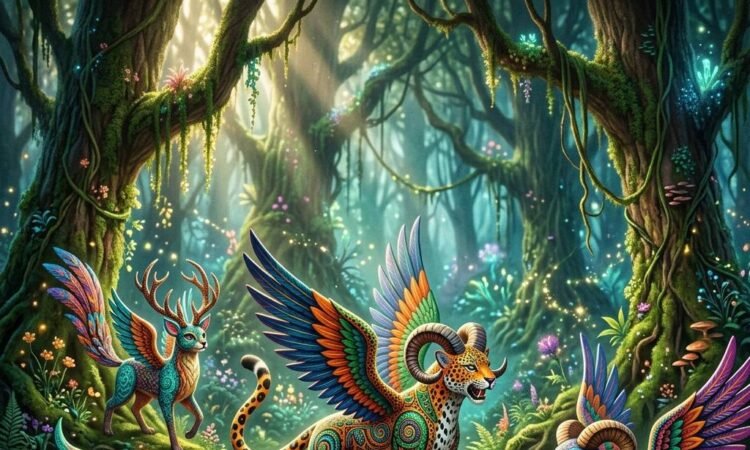
Alebrijes are deeply rooted in Oaxaca, blending whimsical artistry with folklore. These vivid creations reflect traditions through intricate arte. Their patterns and colors bring fantastical creatures to life, from a grinning dog to a leaping frog, each carved with delight and expressive detail.
The legacy of Pedro Linares and Manuel Jiménez shaped Mexican folk art. Their woodcarvings and papier-mâché sculptures introduced fantastical forms. These mythical beings, crafted from wood or papier-mâché, emerged in Mexico City during the 1930s, inspired by surreal and dreamlike visions.
Born from hallucinations during an illness, these designs depict hybrid animals. Recognized globally, artisans use copal softwood to create these indigenous yet modern artistic pieces. They are celebrated during Día de Muertos, a holiday rich in customs and crafted traditions.
Alebrijes gained international recognition through exhibitions and festivals. Their media presence grew from a fever dream to an ultra-popular art form. Oaxacan artisans, working at their workbench, passed this family tradition down, ensuring its popularized status.
From small, brightly painted figures to introduced shipments in the early 90s, Alebrije evolved. Wooden frogs with upturned heads, saucer-like eyes, and cartoonish grins became collector favorites. These exaggerated forms, with outstretched limbs, embody the zoomorphic imagination of their creators.
What Are Alebrijes?
Alebrijes are a familiar part of Mexico’s folk art repertoire, showcasing boundless creativity. These novelty figures, often wooden, include figuras like Oaxacan tonas and nahuals, inspired by Zapotec zodiac spirit guides. They are derived from ancient traditions but nowadays reflect unexpected styles and variety.
Crafted by skilled artisans, Alebrijes are a brightly colored celebration of Mexico’s folk art. These sculptures depict fantastical creatures, blending animals with horns, antlers, wings, fangs, fins, and scales. Some even feature human bodies, all painted in intense, vibrant colors.
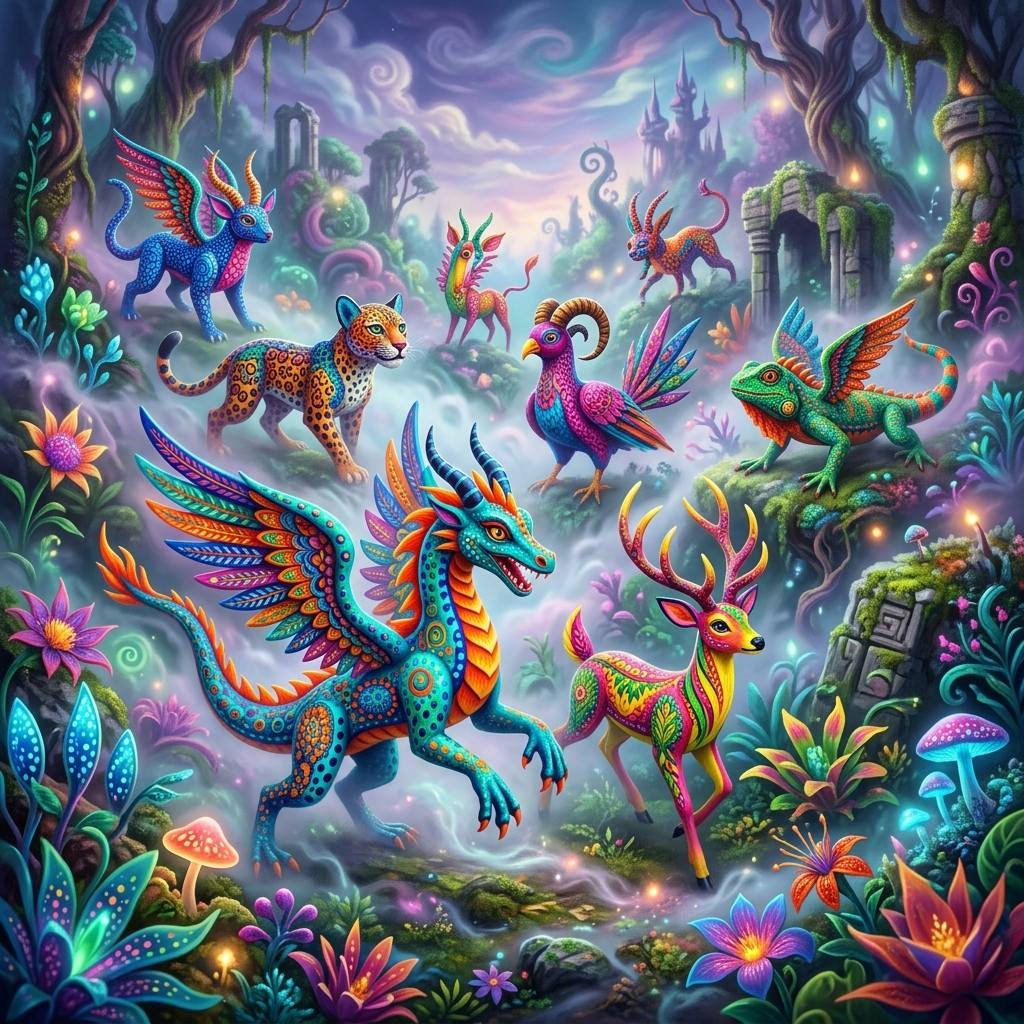
The intricate patterns on Alebrijes are a testament to the artists’ detailed work. Stripes, dots, and geometric shapes combine with flowers and flames to create exaggerated, twisted, and contorted faces. These expressions range from peaceful to playful, suspicious, or even sinister.
Alebrije often depict beasts with unique motifs, driven by the appetite for imagination. Each piece reflects the individual artist’s vision, making every creation a fantastic and one-of-a-kind work of art. Their change over time highlights the evolving nature of this craft.
What makes Alebrije truly special is their ability to inspire. They are not just art but a fantastic representation of the imagination and creativity that defines Mexican culture. Their vivid colors and intricate designs continue to captivate audiences worldwide.
History / Origins
The cartonero tradition, using engrudo made from flour and wheat glue, shaped three-dimensional sculptures. These Chimera-like forms emerged from unknown realms, transforming clouds, rocks, and trees into fantastical beings. Unconscious visions during an ill state in 1943 birthed the first alebrijes.
In Mexico City, Pedro Linares, an artist, envisioned a forest filled with hybrid creatures like a donkey with butterfly wings or a rooster with bull horns. His recovery inspired him to recreate these visions through cartonería, a 20th-century craft rooted in 1936.
The name “alebrijes” is attributed to this artisan from México Distrito Federal, who specialized in piñatas, carnival masks, and Judas figures. This ancient, widespread papercraft, often confused with papier-mâché, became a distinctive Mexican folk art tradition.
During a high fever, Linares hallucinated wild, unnaturally colored creatures with tails, fierce teeth, and bulging eyes. A crowd of voices repeated the word “Alebrije,” startling him awake. After his recovery, he began crafting these scary, vivid sculptures from cardboard.
The 1940s saw the invention of this term, with renowned indigenous artists like Linares creating ethereal, large sculptures. Diego Rivera and Frida Kahlo purchased these works, bringing them to Cuernavaca and commissioning more. This fantastical art form gained global attention.
How Alebrijes Are Made / Carving Process
The process begins with selecting copal wood, valued for its softwood hardness. Branches are cut using a chain saw, and the level of detail is proposed. The wood is hacked into a series of shapes, with each separate body part carefully imagined and defined.
Once the initial cuts are made, the piece is sanded smooth and left to dry for months. This prevents cracking, though cracks are often filled with a sawdust and resin mixture. Before painting, the wood undergoes meticulous preparation to ensure durability and quality.
Traditionally, Oaxaca woodcarvings used aniline and natural ingredients like bark, pomegranate seeds, and cochineal for colors. However, since 1985, acrylics have been used to resist fading and withstand repeated cleanings. Layers of paint create a solid undercoat for the multicolored designs.
The carving process is a family affair, with men carving and women painting. Children help with sanding and other tasks. Ixtle fiber from the maguey plant is sometimes used for embellishments. This shared activity fosters pride and ensures the craft’s survival.
Each piece, carved while the wood is still wet, can take anywhere from hours to months, depending on its size and fineness. Using non-mechanical tools like machetes, chisels, and knives, artisans create sophisticated details that bring these folk sculptures to life.
Original Papercraft / Papier-Mâché Alebrijes
The tradition of Alebrijes began with Pedro Linares, whose descendants, including his son Miguel, granddaughters Blanca and Elsa, and grandson Ricardo, continue his legacy. Near the Sonora Market, these families carry on crafting figures from cardboard, preserving the original papier-mâché techniques.
Today, many families still create colorful Alebrijes using papier-mâché, as originally done by Linares. This larger-than-life craft began in Mexico City during the 20th century, specifically in 1936, when the first Alebrije were attributed to this artisan.
Linares, a México Distrito Federal native, specialized in piñatas, carnival masks, and Judas figures. His work in cartonería, an ancient, widespread papercraft, was often confused with papier-mâché. Yet, his creations stood out for their live, vibrant designs.
The making of these crazy creatures involved Manuel Jimenez’s influence, who helped create a bridge between papier-mâché and wood-carved Alebrijes. The mercado in Mexico City became a hub for these fantastical works, attracting collectors and enthusiasts alike.
From larger papier-mâché creatures to smaller, intricate designs, the tradition thrives. These families continue to innovate while honoring the original techniques, ensuring that the legacy of Pedro Linares and his art remains alive in the vibrant streets of Mexico.
Carved Wood Alebrijes / Oaxaca Development
The tourists of Europe, United States, and Canada fueled the demand for brightly painted whimsical wood carvings. In the Mexican state of Oaxaca, these carvings, called alebrijes, prospered over the past three decades, transforming rural households into thriving artistic hubs.
The influence of Pedro Linares’ work in Mexico City eventually reached the village of Arrazola, where Manuel Jimenez pioneered the first colored creatures carved from copal wood. This adaptation from papier-mâché to wood incorporated visions of pre-Hispanic indigenous Zapotec people.
The art form spread to several towns, most notably San Martín Tilcajete, La Unión Tejalapan, and Arrazola. Each community developed its own style, blending folklore with natural evolution. Families in these towns applied their ingenuity to create unique pieces for income.
The highly stylized treatment of colors and shapes saw artisans putting their mark on fantastic forms. These bright carved figures, often inspired by local animals, became central to the Zapotec valleys, continuing traditions of totems, religious purposes, and even children’s toys.
By the 20th century, the craft became popular across communities, with San Antonino, San Martín, and La Unión emerging as the main hubs. The tradition of woodcarving evolved into a celebrated art form, blending indigenous roots with modern artistic expression.
Alebrijes Today / Popularity / Cultural Impact
The craft of Alebrijes has improved villagers’ lives, evidenced by paved roads, better schools, and streetlights. In the past 20 years, these communities, once without cell phones, have transformed, thanks to the economic growth created by the popularity of these colorful creatures.
The descendants of Pedro Linares and Manuel Jimenez continue to craft papier-mâché and carved wood Alebrijes. Many artists across villages in different regions of Mexico create their own versions of this folk art, which has become prized around the world.
Alebrijes have built a unique arts-based economy, with pieces found in private museum collections and featured in movies, books, and general décor. The film Coco brought Alebrije to global attention, though they are not specifically associated with Día de Muertos.
During the festival, Alebrijes are sometimes used as decorations, showcasing their vivid colors and intricate designs. The economic growth from this craft has given artisans the opportunity for a better life, especially in Oaxaca, one of Mexico’s poorest states.
The woodcarving tradition has not only enriched the lives of artisans but also preserved a vital part of Mexican culture. Alebrije remain a symbol of creativity, resilience, and the enduring spirit of the communities that bring them to life.
Object Lesson: Woodcarving’s Origins in Mexico
Woodcarving in Mexico has deep roots in parables and the Bible, used by friars as visual aids to convert Indigenous people to Christianity. Dominican festivals, ritual dances, and masks became tools to sway native Mexicans toward Catholicism during the colonial era.
The creation of ornate altarpieces, crosses, and angels shifted from Spanish conquistadors to Indigenous craftspeople. This blend of Aztec Empire artistry and colonial influence shaped the history of Mexico, leaving a legacy of intricate woodcarving traditions.
The construction of the Pan-American Highway in the 1940s enabled tourists to travel to rural pueblos, increasing demand for art objects and souvenirs. This surge in interest helped Oaxacan woodcarvings evolve into their current form, known as alebrijes.
Although alebrijes in their current form are less than 50 years old, they have become one of the most popular art forms in Mexico. The pronunciation, “ah-lay-bree-hays,” reflects their unique identity, blending Indigenous roots with modern artistic expression.
The history of woodcarving in Mexico is a testament to cultural resilience. From colonial churches to modern art, the craft has adapted and thrived, preserving its significance while evolving into a celebrated symbol of Mexican creativity and heritage.
Alebrijes: What’s in a Name?
The name “Alebrijes” originated in 1936 when Pedro Linares, an artist born in Mexico City, experienced a fever dream. In a dark forest, he saw zoomorphic creatures with multiple animal body parts, like a snake’s tail, a bat’s wings, and a rooster’s beak.
These strange creatures, materialized from his memory, were rendered using his skills in papier-mâché. The chanting voices in his dream repeated the word “Alebrije,” which startled him awake. This word became the defining term for these fantastical creations.
Linares’ vision of mixing animal parts into hybrid forms, such as a lizard’s legs or a fish’s body, inspired his work. These fever-induced hallucinations gave birth to a new art form, blending imagination with traditional craftsmanship.
The forest in his dream, filled with chanting voices, symbolized the unconscious creativity of the human mind. This zoomorphic art became a way to express the surreal and the mythical, capturing the essence of Mexican folklore.
The name “Alebrijes” itself carries the legacy of Linares’ fever dream, representing the fusion of dark imagination and artistic skill. It stands as a testament to the power of dreams in shaping cultural and artistic identities.
Copal Wood
The quality of copal wood is a major concern for artisans. Once abundant near Tilcajete and Arrazola, it has nearly disappeared due to unsustainable harvesting. This drain on resources has caused artisans to seek local forests or neighboring states for their supplies.
Originally obtained from tropical and dry regions, copal wood comes from the Burseraceae family, specifically the Bursera genus. Known locally as copalillo, this short, squat tree yields wood ideal for carving, though its availability has become a pressing issue for woodcarvers.
Efforts to grow copal trees for sustainable use have been undertaken. These trees take anywhere from five to ten years to grow large enough for harvesting. Despite these attempts, the demand for copal wood continues to outpace its natural regeneration.
Artisans use every piece of copal wood, ensuring minimal waste. The wood’s soft texture and workability make it perfect for carving intricate details. However, its short supply has led to concerns about the future of this essential material in Alebrije production.
The success of Alebrije has inadvertently caused challenges in securing copal wood. As artisans innovate to address these issues, the importance of sustainable practices becomes clear, ensuring that this vital resource remains available for future generations of carvers.
The Annual Mexico City Alebrije Parade
The Annual Mexico City Alebrije Parade is a recent phenomenon, first held in 2007 and sponsored by the Museo de Arte Popular. This vibrant event features giant Alebrije, some over 13 feet tall, made from wire, paper, cardboard, and wood.
The parade begins at the Angel of Independence on Paseo de la Reforma and ends at the Zócalo, Mexico City’s historic center. Bands play popular Mexican music, and the streets are lined with spectators admiring the entries. After the parade, the Alebrijes are displayed for two weeks.
In 2009, more than 130 Alebrijes were featured, showcasing the creativity of artisans from across Mexico. These giant sculptures are judged on their design, craftsmanship, and originality, celebrating the artistry and cultural significance of Alebrijes.
The parade has become a highlight of Mexico City’s cultural calendar, drawing international attention. It reflects the enduring popularity of Alebrijes and their role in promoting Mexican folk art on a global stage.
This annual event not only honors the tradition of Alebrije but also inspires new generations of artists to innovate and keep the craft alive. The Mexico City Alebrije Parade is a testament to the vibrant creativity and cultural pride of Mexico.
Illuminated Alebrijes
Illuminated Alebrijes are a modern twist on the traditional craft, featuring light installations that bring these fantastical creatures to life at night. These glowing sculptures are often displayed during festivals and cultural events, captivating audiences with their vibrant colors and luminous designs.
The concept of Illuminated Alebrijes combines traditional craftsmanship with contemporary technology, using LED lights and internal wiring to create a magical effect. These pieces highlight the adaptability of Alebrijes as an art form, blending heritage with innovation.
Events showcasing Illuminated Alebrije have gained popularity in Mexico City and beyond, drawing crowds eager to experience the enchanting glow of these creations. They serve as a reminder of the enduring appeal of Alebrijes and their ability to evolve while staying rooted in tradition.
The Illuminated Alebrije represent a new chapter in the story of this iconic Mexican art form, proving that the imagination behind Alebrijes knows no bounds. These glowing sculptures continue to inspire wonder and admiration, both in Mexico and around the world.
Conclusion
Alebrijes are more than just folk art; they are a vibrant expression of Mexican culture, blending imagination, tradition, and craftsmanship. From their origins in Pedro Linares’ fever dream to their evolution into wood-carved masterpieces and illuminated sculptures, Alebrije have captured the hearts of people worldwide.
These fantastical creatures symbolize the creativity and resilience of the artisans who bring them to life. They have transformed communities, inspired global audiences, and become a cherished part of Mexico’s cultural identity.
As Alebrijes continue to evolve, they remind us of the power of art to connect us to our heritage while embracing innovation. Whether displayed in a parade, illuminated at night, or cherished as a piece of home décor, Alebrijes remain a testament to the boundless possibilities of the human imagination.